One year after the implementation of the European Accessibility Act (EAA), there is still not a single major Dutch online store that is fully accessible to people with disabilities. This is according to a study by Level Level, which automatically scanned 300 Dutch online stores and also tested the fifteen largest ones in practice. The conclusion is stark: the law is in effect, the deadline has passed, but implementation is lagging behind.
What the study shows
The figures tell two stories at once. On the one hand, there has been progress. Whereas last year an average of 108 automatically detectable errors were found per homepage, that number has now dropped to 26 per page. The average technical accessibility score rose by 15 percent. So online stores have definitely taken action.
On the other hand, that technical score says little about the actual user experience. At thirteen of the fifteen largest online stores, blind users encountered major problems during the ordering process.
They were not even able to complete an order on their own at four online stores. IKEA and Apple’s Dutch site scored the highest, while the Plus supermarket chain came in last.
"Compliance isn’t a one-time event. Every new feature or extension can introduce new barriers, so accessibility should be part of your development process."
The most instructive point comes from the Netherlands Authority for Consumers and Markets (ACM) itself: technical compliance does not automatically lead to an accessible user experience. You can have your alt text and color contrasts in order on paper and still have a checkout process where a screen reader gets stuck. That difference between “meets the checklist” and “actually works for everyone” is exactly where things go wrong in practice.
Why automatic scanning isn’t enough
This ties in with something we consistently see during accessibility audits: automated tools only detect about thirty percent of all accessibility issues. They’re excellent at identifying missing alt text, insufficient color contrast, or incorrect heading structures. But the barriers that really matter are in the user flows: can you navigate through checkout using only your keyboard? Does a screen reader announce the correct error messages? Does a product configurator work without a mouse?
That explains the gap in the study. The automated scores are rising because that’s what the tools are designed to do. But the manual practical test shows that the ordering process—the part that really matters—still doesn’t work for many people. A score of 26 errors per page sounds like progress—until you realize that four of the fifteen largest online stores do not allow blind users to place an order on their own.
What exactly are the requirements under the EAA?
To be clear, since awareness of this isn’t yet widespread: the European Accessibility Act will take effect on June 28, 2025. If you sell digital services to consumers in the EU, your online store must comply with WCAG 2.1 AA, and with WCAG 2.2 AA by 2026. This standard sets requirements for color contrast, keyboard navigation, screen readers, form labels, error messages, and alternative text, as well as dozens of other aspects of how a site functions for people with visual, motor, auditory, or cognitive disabilities.
The only exception applies to micro-enterprises: fewer than ten employees and less than two million euros in annual revenue. This means the requirement applies to virtually every serious online store. The ACM enforces this regulation and can impose fines of up to 900,000 euros or one to ten percent of annual revenue. The study makes it clear that the likelihood of a problem is not a theoretical risk, but that most major players simply aren’t there yet.
What this means for Magento online stores
If you visit Magento, there are a few specific points to note. The standard Luma front end scores poorly on many WCAG criteria.
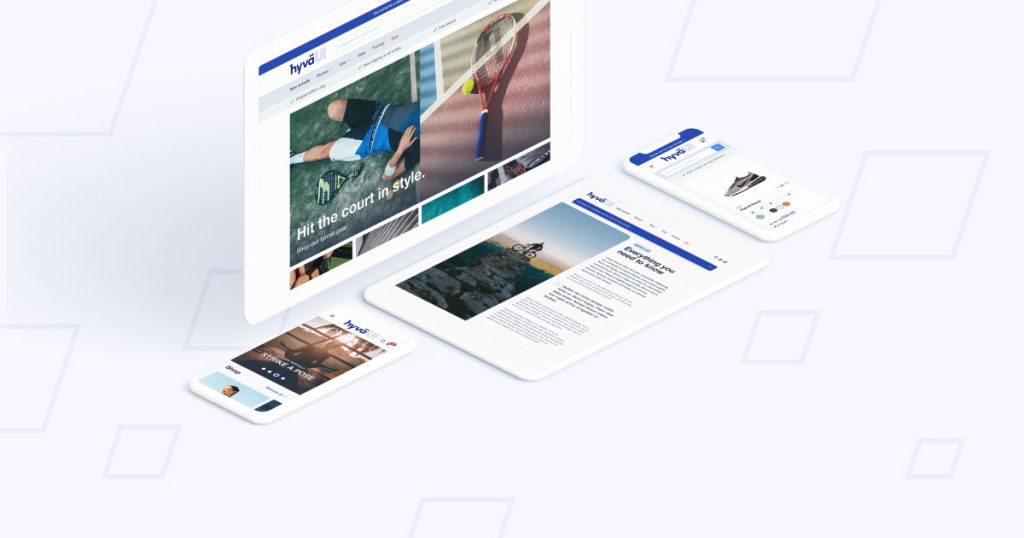
Hyvä performs better, particularly on performance-related aspects, but is not automatically compliant. Alpine.js components that are not set up correctly lack ARIA attributes, focus management, and keyboard behavior. Extensions introduce their own components that are rarely tested for accessibility, and custom features such as checkout logic, product configurators, and filters are precisely where things most often go wrong.
The issues we consistently observe align with the findings from the study: insufficient color contrast, forms without correctly labeled fields, product photos without meaningful alt text, and checkouts that cannot be fully navigated using only the keyboard. A generic accessibility audit lacks that nuance, whereas a specific Magento online store audit does not.
From a Snapshot to an Ongoing Focus
Perhaps the most important lesson from the study is that compliance is not a one-time goal. As soon as new functionality is built, an extension is updated, or the theme is modified, new barriers can arise. A one-time audit provides only a snapshot. For online stores that are actively evolving, accessibility should therefore be an integral part of the regular development process, not a separate final check.
Want to know where your online store really stands, beyond what an automated scan reveals? We conduct WCAG 2.2 AA audits specifically for Magento online stores —both automated and manual—at the code and component levels.
You’ll receive a detailed report with findings, prioritization, and recommended solutions. Not an abstract document, but a practical guide you can use to get started.